Walking Meditation – What is it?
During one of my meditation classes recently, a participant asked ‘What is a Walking Meditation?’ A walking meditation consists of begin mindful as we walk, sometimes slowing down each step we take and breathing deeply (or counting silently) while we walk. A walking meditation is a wonderful way to calm our mind, get our body moving and just be – in the present moment. I explained that there are countless styles of walking meditation. All are simple to do, don’t need any special equipment, they are suitable for all who walk and can be done in all weathers!
 I first learned about this style of meditation when I attended a silent retreat on the Banks Peninsula (pictured right) in Christchurch, New Zealand in 2004. Our facilitator invited outdoors asked us to begin by focusing on our breathing. Once we did that we then started counting silently to ourselves. Then we were instructed to walk in single file along a path. It was important for us to pay close attention to our breath, the counting, as well as the placement of our feet (as well as being careful not to collide into one another).
It was incredibly enlightening to me how mindless I had been while walking previously…this simple exercise made me slow down, breathe deeply and pay attention to what I observed along the way. Each thing I saw and experienced on the path during my walking meditation made an impact on me. Normally I would have paid absolutely no attention to cracks in the paving stones, flowers or grass beside the path, weeds, smells, sounds of the birds or the wind. I would have walked past them oblivious had I been talking on the phone or catching up while chatting with my walking buddy.
Yet on the path during my walking meditation – here they all were, each beautiful item/sound/sensation waiting to be observed, acknowledged and valued in that moment. Each awareness brought me something very special deep inside and I found myself strangely, yet profoundly moved.
Walking Meditation: Research
There are many research studies to support how breath and meditation practices support the well-being of our bodies, our minds and our spirit. When we take even the shortest of breaks in nature, we feel a sense of peace, relaxation and inner balance. I think the most difficult thing nowadays is to stop what we are doing and get out! We seldom allow ourselves time from our hectic life to get outdoors in nature.
Walking Meditation: Examples
 Before you begin your walking meditation, be sure to focus on your posture. Stand up straight, with balanced posture and have your eyes forward (or eyes turned slightly downward to watch where you are going). If possible, walk with a relaxed, easy, rhythmic stride and make sure you breathe deeply into your abdomen to get a good expansion of your lower ribs. Walk with our without music. Remember though, silence is golden – you’ll miss the amazing sounds of nature if you have your headphones on. As with any meditation, thoughts will come and go. Do your best to observe them, not get caught up in them or be annoyed by them. Thinking is what your mind is used to doing, so initially it won’t be used to you stopping your thoughts. Persevere, it’s worth it!
- Inhaling and exhaling in 1 part (1:1) or 2 parts (2:2) – Beginners Exercise
In this exercise you will coordinate your breathing with your steps. Begin by breathing in on the left foot step and breathe out on the right foot step (or vise versa). Do not rush. Don’t try to force your breathing. Depending on the speed you are walking and what is comfortable for you, if might be easier to take two steps on the inhale and then two steps on the exhale. All the while, make sure you breathe naturally. Do this for 5 minutes and then walk normally for 10 minutes. Then repeat.
In time (and with practice) you can work up to doing a walking meditation for 20-30 minutes continually and then walking normally for an hour if you have time. Continue walking and breathing at a steady pace. This walking meditation can be especially useful if you have a lot on your mind.
- Inhaling and exhaling in 4 parts (4:4) – for Energy and Clarity
While walking slowly, inhale through your nose for 4 steps. Pause briefly. Then exhale through your nose for a further 4 steps. Take another small pause.
Do this breathing pattern for 3 minutes. Then continue walking normally for 5 minutes. Then go back to walkign slowly and inhaling for 4 steps. Pause briefly again. The exhale once more for 4 more steps. Pause once more. Walk normally again for 5 minutes. Repeat this sequence several times.
- Inhaling and exhaling in 8 parts (8:8) – for Energy and Clarity
In this example you will coordinate your breathing and your steps with each other. Begin by walking slowly. Once you have a slow walking rhythm, inhale continually for 8 steps through your nose and exhale continually for 8 steps through your nose. Do this for 3 minutes and continue walking normally for 5 minutes. Then again inhale continually for 8 steps through your nose and exhale continually for 8 steps through your nose. Repeat this exercise several times in a row. This is a bit more challenging as it requires your concentration.
When you have a good rhythm to your walking and breathing, allow yourself to observe your surroundings in a detached manner. Avoid making judgments, just observe and take it all in. Judgments or worries are not useful in a walking meditation – but they are inevitable, just let them go as/when they come up.
 You may find like Forrest Gump, kilometers (or miles) disappear beneath your feet as you walk your troubles, concerns and cares away! A side-effect of walking meditation is that you might get some:
- clarity, or
- unexpected, enlightening and surprising insight into a situation and/or
- energy, even a feeling of freedom and euphoria
Take a risk…Give it a try – you never know what you might get!
About Michelle
Born in the UK, Michelle A. Hardwick of Release…Peace is a highly qualified Hypnotherapist who began her practice in 1998. Her professional development continued with Dolores Cannon, renowned QHHT Hypnotherapist specializing in the recovery of “Lost Knowledge” as well as Dr. Brian Weiss, ground-breaking Psychiatrist, New York Times best-selling Author and authority in the field of Past Life Regression.
As a newly published author, Michelle’s own story features in Dr Brian and his daughter Amy Weiss’s recently released book “Miracles Happen”.
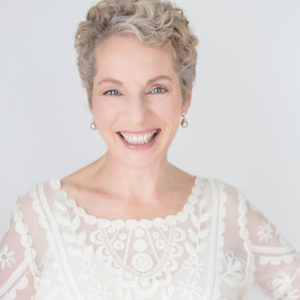 Michelle (pictured right) is also an experienced, advanced Trainer and Practitioner of the Emotional Freedom Techniques (EFT), and is qualified in Neuro-Linguistic Programming (NLP) and honoured to be a Network Cork Business Woman of the Year Award 2018 Finalist. Release…Peace offers personal consultations and tailored programmes to support an individuals’ health and well-being.
Contact Us
If you need help to unplug or move through a stressful situation and come back to inner stillness and calm, then contact us. We provide highly personalised, confidential consultations either in person in Cork or online to support you through a process of positive change. Appointments can also be booked online. If you don’t live in Ireland, we can work together online via Skype and Zoom from the comfort of your office/home. Call us on: (Ireland) 087 149 2338 to chat.
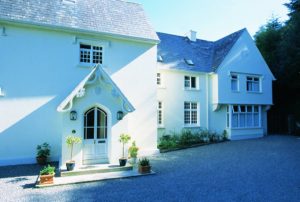
Alternatively join us for our potent Weekend Retreats, if you’d like to delve deeper and uncover/discover more about yourself, love and self-love. We will facilitate one in October 2018 in the gorgeous Liss Ard Estate, West Cork, Ireland along the Wild Atlantic Way!


 Scream – Take a drive, (or even on your way home) wind the window down, stick your head out of the window, let rip and scream out loud! Let it go and then arrive home feeling very calm. One tip – it’s best not to do this in built up areas ;o}
 In his book, the
 When we start to become aware of this outdated programming we are able to begin to make changes. Firstly we can stop expecting others to make us happy – that’s not their job. We can also release the expectation of others being like us. In addition we get help to release the belief (and burden) that others should be the primary source of love in our lives. As we make changes and begin to focus on our inner world, we can start to fill our own love tank and take responsibility for our own happiness and well-being. The more we do this, the better we will feel.
 If you’d like to learn to fill your own love tank or explore any of the themes raised in this blog regarding loving yourself and others – feel free to

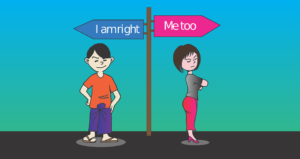 we argue, we rarely take the time to discover what is on the other persons’ map. We generally spend all our effort and energy defending our map, trying our best to convince the other person that our map is ‘right’. We never take a step back to look at their map. If we did, we’d discover that – surprisingly – we both want the same thing.
 So in any disagreement it’s helpful to stay curious to what is on the other persons’ map. We then have a few opportunities:


 :
: When we don’t love ourselves then everyone suffers. No-one gets the best from us, not even ourselves.
 Feeling insecure, needing reassurance, jealousy
 EFT is safe, gentle, and easy to use, with proven results. The clinical results over the last 15 years have been remarkable, as it frequently provides impressive results and these results are usually long lasting.

 Neurolinguistic Programming NLP

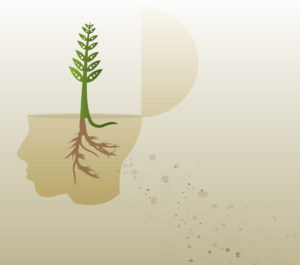 Hypnosis has long been associated with the strange and mysterious, with sideshows or faith healers. But the truth is that hypnosis isn’t the least bit mysterious or controlling. It is in fact a state of intense relaxation and concentration, where the mind becomes remote and detached from everyday cares. In this relaxed state, positive suggestions for change and growth can be given to the subconscious and these become part of the way we then behave and live our life.
 What can Hypnosis do for me?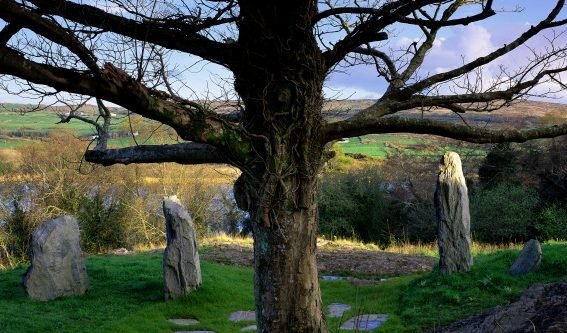
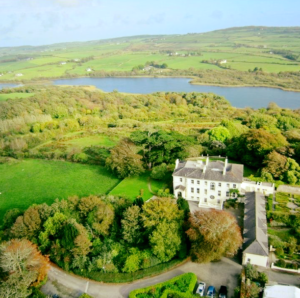 Weekend Retreats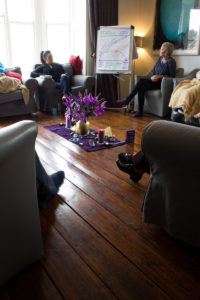
 There are a number of experiences available throughout our Weekend Retreat, including:
 All meals lovingly designed and prepared by our wonderful private chef and nutritionist
 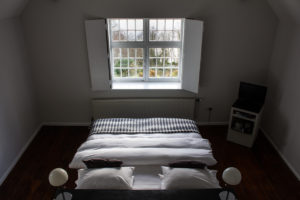 There are a number of options in terms of investment in yourself:
 Contact Us
 A few months back, we ran a trial with a series of meditation and relaxation classes at the
 Meditation & Relaxation Groups